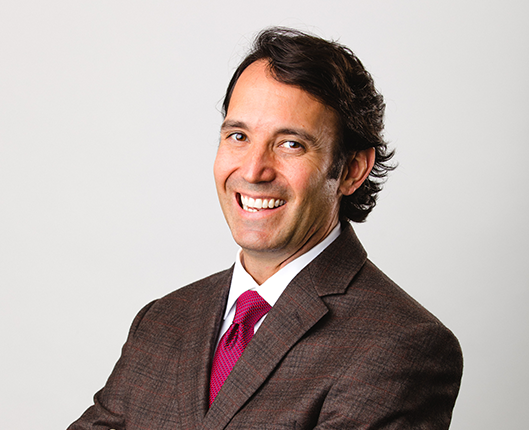
Dr. Anz Orthopedic

AAOS Now Interview

Dr. Anz was interviewed regarding his JAAOS article examining the application of biologics for the rotator cuff, meniscus, and cartilage by AAOS Now, the official member news magazine of the American Academy of Orthopaedic Surgeons.

Maureen Leahy asks:

Biologics have been used for some time in medicine. What is their role in orthopaedics?

Dr. Anz:

In my opinion, biologics represent the next frontier in orthopaedics.  During the past 30 years, particularly in sports medicine, the focus has been on the use of the arthroscope, which revolutionized how we performed treatments.  I believe biologics will revolutionize the next 30 years.  

Maureen Leahy: 

Are each of these biologic technologies equally important?

Dr. Anz:

I don’t think any one of them is more important or warrants more study than the others.  PRP, BMA, and stem cells are like arrows in a quiver.  In some instances, PRP will be the right arrow to use; in a different situation, BMA might be more appropriate.  From a regulatory standpoint, PRP and BMA are the arrows we can use right now.  The FDA has made it clear that it is going to take a tough stance on stem cells, no matter what the harvest site-and rightfully so. It will be exciting, however, once we can use them. 

Dr. Adam Anz

If you would like to see the interview in its entirety, go to:

http://www.aaos.org/news/aaosnow/feb14/clinical9.asp

Dr. Anz's Related Blog

3-T MRI mapping is a valid in vivo method of quantitatively evaluating the anterior cruciate ligament: rater reliability and comparison across age

3-T MRI mapping is a valid in vivo method of quantitatively evaluating the anterior cruciate ligament: rater reliability and comparison across age

As biologic augmentation methods emerge, objective measures of soft tissues are necessary for developmental study. The purpose of this study was to develop a quantitative MRI mapping protocol for the

Articular Cartilage Regeneration With Autologous Peripheral Blood Progenitor Cells and Hyaluronic Acid After Arthroscopic Subchondral Drilling: A Report of 5 Cases With Histology

The purpose of this study was to evaluate the quality of articular cartilage regeneration after arthroscopic subchondral drilling followed by postoperative intraarticular injections of autologous peripheral blood progenitor cells (PBPCs)

A Tensionable and Retensionable Knotless Anchor Repair Construct for Compression After Reduction of Tibial Avulsion Fracture of Anterior Cruciate Ligament

Anterior cruciate ligament (ACL) injuries are on the rise in the pediatric and adolescent patient populations, with incidence rates peaking at age 16 years for female patients and at age